Martin Helseth
When I was two weeks old, I went on my first boat trip.
With an eager diver for a father and a childhood in Ålesund, surrounded by water on all sides, it was only natural that the ocean would become a red thread throughout my life.
Now I’m back in Sunnmøre after eleven years as a competitive rower in Oslo.
Elite sport taught me structure, discipline, long‑term goals, and the willingness to fail along the way. Stroke by stroke, it took me to the Olympics in Tokyo and Paris — and the next chapter is Rewild Norge.
While living in Oslo, I led Marea, an organization working to strengthen the ecological health of the Oslofjord. We cultivated kelp, blue mussels, and tunicates, carried out cleanups, and shared knowledge. Together with skilled marine biologists, I gained valuable insight into how nature restoration can be done. Marea has now merged with Marinreparatørene, where I serve on the board.
You’ll find me in a wetsuit and dive mask several times a week.
Time spent in the sea gives a close connection to the challenges the ocean is facing. Here in Sunnmøre, marine debris, especially lost fishing gear, is one of the greatest threats to marine life.
It’s easier to care when you see the problem with your own eyes.
Social sustainability is something I’m passionate about and want to address through this project. In Møre og Romsdal, 32,000 people of working age are outside the workforce. I believe deeply in the value of community, and that the experience of mastery is more important than many realize for living a good life. Rewild Norge will be an arena where we focus on nature experiences, doing meaningful work, and serving as a stepping stone into employment.
Since 2022, I’ve been the course coordinator at Frivannsliv, which provides freediving training. I teach myself and coordinate courses with instructors across the country. Through volunteer cleanup efforts, we have removed more than 50 tonnes of marine debris since 2019.
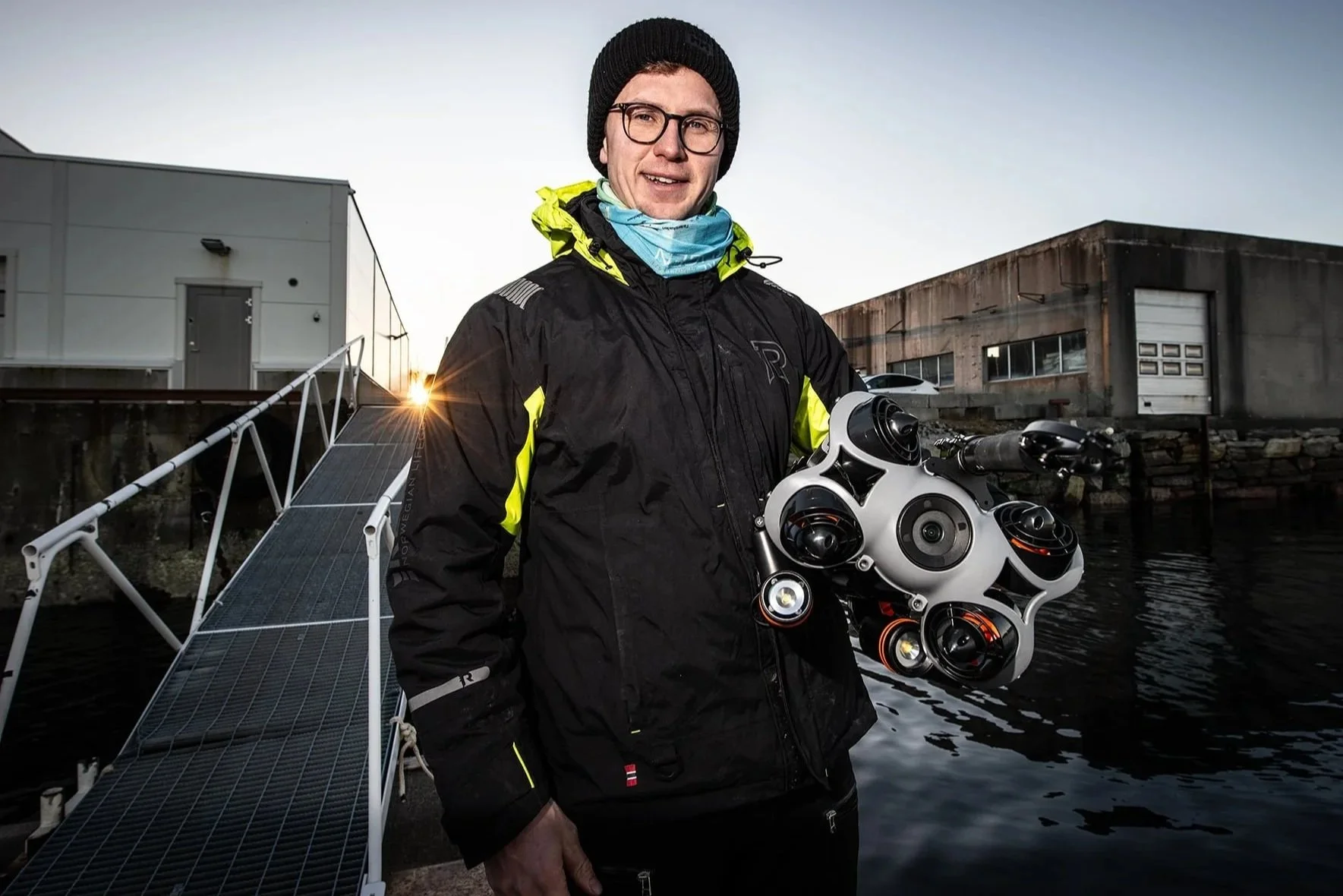
This work is incredibly meaningful to me, and Rewild Norge is a professionalization of that effort a way to enable even greater impact, now with an ROV instead of freediving.
It will take many hands if we are to give nature the chance to repair itself.
Because our work is so hands‑on, we believe our reporting should be too: gear by gear, and kilo by kilo.